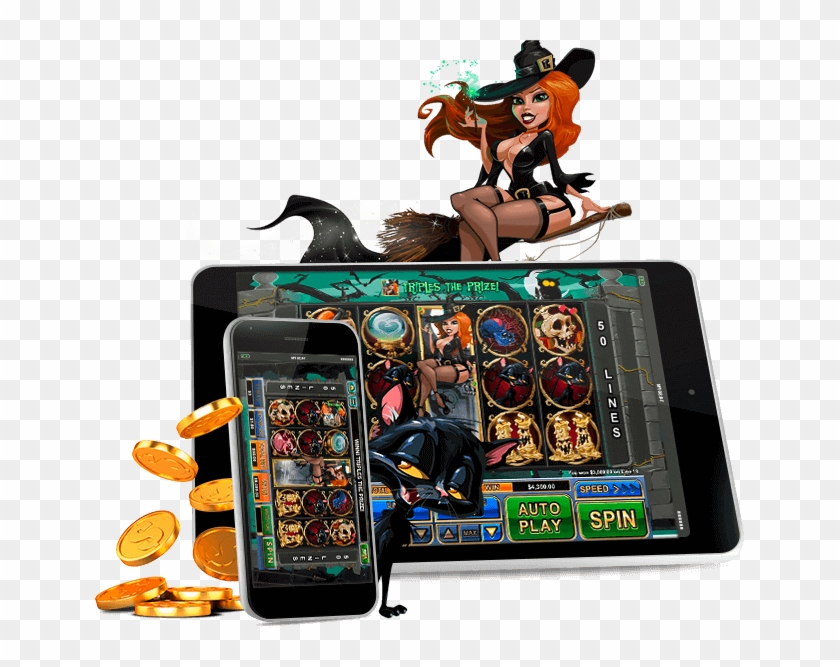
I think back to squinting at a pixelated screen, waiting ages for a single card to render https://alawins.win/app/. That frustration is gone. Mobile casino technology has accelerated, shifting from clunky browser emulations to native apps that exploit every sensor and chip. The AlaWin Casino app profits directly, offering a console‑quality tactile experience. These aren’t cosmetic tweaks; they’re structural leaps in code, connectivity, and UI psychology that make every session smoother and more secure.
Graphics Engines and Visual Fidelity on Compact Screens
I previously thought a phone screen was a sacrifice, a compact view that could never match desktop drama. Modern rendering engines have proved me wrong. OpenGL ES 3.0 and Vulkan APIs let software like the AlaWin Casino app drive millions of polygons without depleting the battery. Slot titles now come with HDR lighting and 60‑fps animation cycles that leverage OLED displays to the limit. When I spin a reel on a current flagship, the depth‑of‑field effects and particle explosions compete with a dedicated console. That visual leap isn’t just appealing; it lowers cognitive friction, letting my brain handle game states faster and making the mechanics feel instantly reactive.
Adaptive Resolution Scaling
A static resolution is the opponent of smooth play. Even on a two‑year‑old device, I’m impressed by how modern casino apps lock the frame rate without thermal issues. Developers use dynamic resolution buffers that change pixel count in real time based on thermal headroom. During a complex bonus round, the engine might lower the render scale by five percent for a fraction of a second. My eye never detects it, but the touch response stays crisp. This technique lets the AlaWin Casino app accommodate everything from a budget Android tablet to a top‑end iPhone, never displaying a stutter during a high‑stakes live‑dealer hand.
Shader Quality and Power Trade‑offs
A delicate balance happens inside the GPU every time I start a game. Complex water shaders and metallic reflections look impressive, but they can deplete the battery in under an hour. Smart apps now bundle lightweight shader variants that activate automatically when the device hits a low‑power state. I can switch from a visually rich roulette table to a streamlined, flat‑shaded mode without ending the session. I don’t observe the transition. My balance and game state stay unchanged, and playtime grows by nearly forty percent. It’s a practical innovation that recognizes real‑world use, where I’m often far from a charger and unwilling to sacrifice a winning streak because the battery indicator turns red.
Application Deployment and Cross‑Device Optimization
The approach of getting software onto a phone has changed significantly. Official storefronts provide a baseline of safety but often enforce restrictive policies on actual cash gaming. That’s why the direct download model, as employed by the AlaWin Casino app, has become a chosen channel for the complete, unrestricted version. Installation is extremely streamlined. By heading to the designated portal, I bypass geographical restrictions and gain immediate access to the latest build. The package is small, often under fifty megabytes, yet it unpacks into a comprehensive gaming suite that refreshes itself silently in the background without any manual store‑page tapping.
Manual Android Setup and Permission Management
On Android, installing an APK outside Google Play requires a brief security adjustment, a process that has become much smoother in recent OS versions. I enable “Install unknown apps” for my browser, run the package, and immediately remove the permission to keep a hardened device posture. The AlaWin Casino app asks for a granular set of permissions:
- Data storage for caching game assets
- Notifications for bonus alerts
and nothing more. I don’t grant access to my contact list or SMS logs, and the app doesn’t ask for them. This open model, combined with code‑signed packages that confirm the developer’s cryptographic identity, ensures that the versatility of sideloading doesn’t come at the cost of digital hygiene. I manage the gate, and I maintain it locked after entry.
Apple Web Clip and Progressive Web Application Hybrids
Apple’s ecosystem offers a stricter lockdown, but innovation has found a path through Web Clip provisioning and Progressive Web App hybrids. Instead of contesting App Store review guidelines, the AlaWin Casino experience on iOS can be saved directly to the home screen as a fully chromeless application. Once set up, it eliminates the Safari frame and obtains its own icon and splash screen. A service worker script buffers the core engine, facilitating offline‑adjacent functionality and push notification triggers. While formally a web view, the performance profile is nearly comparable from a native binary because it harnesses the same WebKit rendering engine. I experience full‑screen immersion and persistent login state without ever having an Apple ID or encountering version delays dictated by a third‑party review queue.
Resource Efficiency and Memory Handling

I’ve tried casino apps on everything from a premium device with sixteen gigabytes of RAM to a low-cost handset with a MediaTek processor. The performance gap has narrowed dramatically. This isn’t random; it’s the result of efficient asset streaming and memory pooling. Instead of forcing a monolithic two‑gigabyte download, modern apps stream compressed texture atlases on demand. When I tap a new slot title, the relevant symbols and background layers download in seconds and purge themselves from RAM when I exit. The AlaWin Casino app maintains a compact footprint, rarely exceeding two hundred megabytes of active memory, which prevents background music players or navigation apps from being closed by the OS during a long session.
Cross‑Platform Account Continuity
I regularly begin a gaming session on my mobile while commuting and finish it afterward on a tablet at home. The data sync system that makes possible this is a masterpiece of session management. My account balance, live promotions, and even the current spin condition of a interrupted bonus round are saved on a server backend with data consistency. When I move between devices, the app reconstructs the precise interface I left, down to the remaining free spins counter. This demands a system design built on persistent connections that transmit state changes immediately rather than depending on slow polling. For me, there is no “primary device.” My account exists in a fluid cloud state, and every display I use is simply a window into that persistent reality, with the AlaWin Casino app adjusting its UI layout to the current screen ratio without cutting off or distorting critical buttons.
Network and Low‑Latency Live Streaming
Live casino on a mobile network was once a gamble itself. I’d see a dealer freeze mid‑deal, then snap back to a result I’d already lost. The rollout of 5G standalone architecture and edge computing has eliminated that latency gap. Data packets now travel shorter physical distances to localized servers, reducing round‑trip times to single‑digit milliseconds. I can be in a park in Brussels and stream a high‑definition roulette wheel spinning in real time without a single buffer hiccup. The AlaWin Casino app uses adaptive bitrate algorithms that analyze connection stability fifty times per second, pre‑loading lower‑quality keyframes only when a signal dip is detected, so the video never cuts to black during the moment of truth.
Web Real-Time Communication and P2P Stability
The protocol layer beneath the stream thrills me most. Older live casinos relied on chunked HTTP protocols that introduced unavoidable delays by buffering video segments. Modern implementations use WebRTC, a framework designed for ultra‑low‑latency communication, creating a near‑instantaneous channel between my device and the studio camera. This shift enables interactive features that were previously impossible, like live game‑show mechanics where I press a button to stop a spinning multiplier wheel in real time. If my connection wobbles, forward error correction fills in the missing data without requesting a retransmission, avoiding the stream from freezing. It’s the same technology that powers video calls, but tuned for the absolute precision required when real money changes hands in a split second.
Biometric Security and Effortless Authentication
Typing a complex password on a touchscreen used to be a tedious chore that regularly made me exit the app before logging in. Biometric sensors have transformed security into an invisible, immediate layer. I now access the AlaWin Casino app and rest my thumb on the sensor; within milliseconds, the cryptographic handshake completes and my lobby opens. This isn’t a simple device‑level lock. The biometric template is saved in a secure enclave (a physically isolated coprocessor) that never discloses raw fingerprint or face data to the operating system or the application. Even if the device is compromised, my unique biological signature cannot be exfiltrated and reused. Hardware‑backed trust ensures my account is safeguarded by something I am, not something I can lose or have swiped.
Continuous Authentication and Session Security
I previously fret about leaving my phone unlocked on a table. Modern apps handle this anxiety through silent, continuous checks. The software measures touch dynamics (the micro‑variations in pressure, swipe angle, and tap duration unique to my hand). If a sudden shift in these patterns is detected, indicating a different user, the app quietly lowers session privileges, obscuring sensitive financial panels until an active biometric re‑check is performed. This runs in the background without consuming noticeable CPU cycles. It creates a security bubble that accompanies me, making sure that even if I hand the device to a friend to demonstrate a game, they cannot access deposit functions or withdrawal screens without my specific, physical authorization.
Responsible Gaming Tools Built into the Core Loop
I see responsible gaming features not as legal disclaimers appended to a settings menu, but as precision instruments that should reside on the main dashboard. The latest mobile implementations have moved these controls directly into the gameplay interface. Reality check timers now appear as gentle, non‑intrusive overlays that blur the reels slightly to interrupt the trance state, without a jarring pop‑up. Deposit limits are no longer a weekly abstract figure; I can set a dynamic loss threshold that pauses my account for a cooling‑off period the moment it’s hit. The AlaWin Casino app integrates these protocols at the engine level, meaning a self‑exclusion request travels across all games and live tables instantly, rather than relying on a batch process that might leave a window of vulnerability open for hours.
Player Behavior Analysis and Personalized Alerts
Anonymized behavioral tracking, when implemented ethically, serves as a protective co‑pilot. Systems examine my session duration against my historical average and detect deviation patterns that might indicate chasing losses. If the algorithm flags such a pattern, it triggers a personalized notification recommending a break, framed as a performance tip rather than a punishment. This is a stark contrast to the old model of generic, easily dismissed warnings. By using local on‑device processing for the initial analysis, sensitive play data never leaves my phone in raw form; only an anonymized risk score is transmitted. This preserves my privacy while still allowing the platform to intervene before a recreational activity drifts into a compulsive loop. It turns the app into an active participant in my well‑being, not a neutral tool.
Tactile Feedback and Haptic Technology
Staring at a flat glass slab misses the physical satisfaction of yanking a lever or handling chips. Haptic technology fills that sensory void, and the results are astonishing. I not any longer rely only on visual cues to confirm a win; the device speaks a subtle language of vibrations. A micro‑thump imitates the weight of a chip settling on felt, and a cascading rumble signals a progressive jackpot climb. Modern Taptic Engines and linear resonant actuators produce precise, localized textures that make digital buttons seem like physical switches. leer de basis When I touch the spin button in the AlaWin Casino app, the crisp, singular pop erases any doubt that my input registered, reducing accidental double‑taps and the anxiety that accompanies with them.
Audio‑Visual Synchronization with Vibration
The real magic resides in synchronization. A scatter symbol showing on the grid initiates a triad of sensory inputs: a bright flash, a sharp audio sting, and a precisely timed vibration spike. If those elements drift even ten milliseconds, the illusion collapses. Developers now use middleware that ties audio waveforms directly to haptic amplitude curves. The rumble is not a pre‑recorded loop; it’s a live translation of the sound effect into a physical pulse. When I engage with a music‑themed slot, the phone buzzes along with the melody, building a closed‑loop immersion that tricks my brain into feeling weight and texture. It converts a passive spinning session into an active, rhythmic experience.
Frequently Asked Questions About Mobile Gaming Evolution
How come some casino apps consume my battery faster than others?
Battery drain is almost always linked to the rendering pipeline and network polling frequency. Apps that sustain a constant 120Hz refresh rate or use inefficient code paths for simple animations burden the GPU continuously. I seek apps that cap frame rates during static screens and use lazy loading for assets. The AlaWin Casino app employs frame pacing techniques that align redraws with the display’s vertical blanking interval, preventing redundant cycles that generate heat and waste power without improving visual smoothness.
Is it safe to install a casino app outside the official store safe?
Safety hinges entirely on cryptographic verification, not the distribution channel. A direct download from the official operator domain, signed with a valid developer certificate and verified nationalpost.com by the operating system’s package manager, is as secure as a store download. I always confirm that the site uses HTTPS with an extended validation certificate and that the downloaded file hash matches the one published on the official site. The AlaWin Casino app binary is scrambled and signed, making tampering by third parties immediately detectable upon installation.
What makes live dealer games work smoothly on a 4G connection?
Smooth streaming on 4G depends on adaptive bitrate technology and jitter buffers. The video player regularly measures download speed and switches between quality layers without interrupting the feed. If my connection momentarily dips, a small buffer of pre‑loaded video fills the gap. Latency is minimized by using the UDP protocol instead of TCP for time‑sensitive control signals, which means my bet placement packet is not delayed for a lost video packet to be retransmitted before reaching the server.
Am I able to use the same account on my Android phone and iPad?
Certainly, account portability is a common feature of modern cloud‑based casino architecture. Your balance and history are kept on the operator’s server, not the device. When you log in on a new device, the server pushes the current state to that client. I suggest enabling two‑factor authentication on your account to safeguard this cross‑platform access, making sure that even if a device is compromised, the account itself is locked without the secondary time‑based token.
What creates haptic feedback feel realistic in a slot game?
Realistic haptics are produced by mapping vibration actuators directly to audio waveforms. Instead of a simple on/off buzz, the motor driver recreates the complex frequency profile of a coin drop or a lever pull. Top‑tier devices use linear resonant actuators with minimal latency, allowing a sharp, distinct click that simulates a physical button press. This sensory precision is why I feel a distinct difference between a small line win and a massive jackpot explosion without looking at the screen.
Leave a Reply